
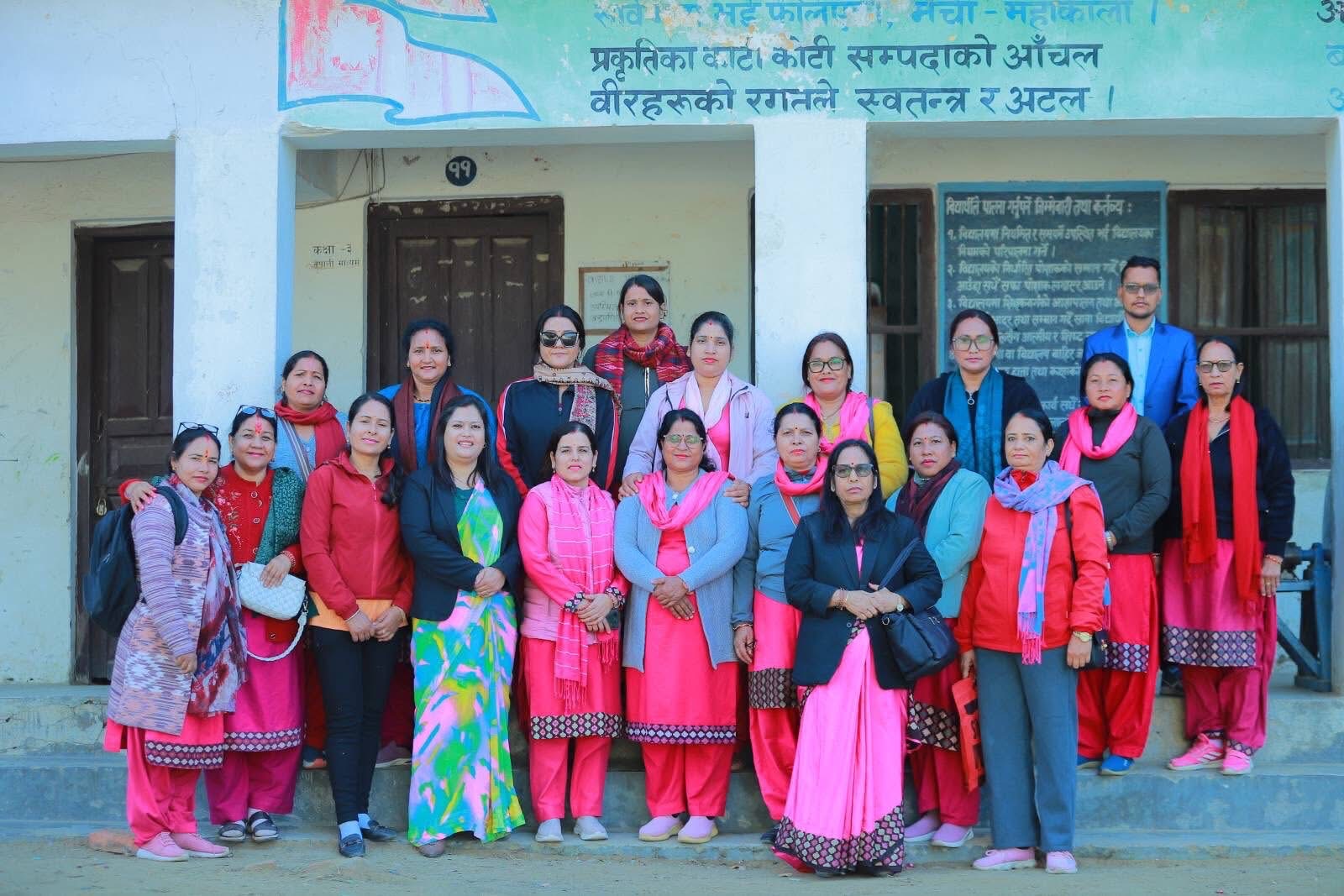
Teacher’s Training
Expected Achievements After The Training
1.Through this project, children will learn through play and enjoyment, not through rote learning. They learn through desire, not through compulsion.
2.Since children enjoy learning, they like coming to school and are positive about learning, which attracts students to the school and increases the number of students in the school.
3.Children learn through play and enjoyment, using subject-specific knowledge and child-friendly play materials. Children at a critical age of development have a balanced intellectual, social, physical, and emotional development.
4.Children of this age group enjoy playing in child-friendly play groups. While playing in a group, they learn to follow the rules of different games, learn to wait their turn while playing, and learn to coordinate with each other in a group. These behaviors and habits are very important for him throughout his life. Learning through play contributes to the social development of children. The production of a social personality is a strong aspect for a society and a nation.
5.While learning through play, children sometimes win and sometimes lose, and express joy when they win, and even when they lose, they are learning to control themselves. In life, you don’t always win, sometimes you lose, but children learn from a young age to control their emotions when they lose. This way, unpleasant incidents in society are also minimized.
6.Children of this age group do various activities while learning through play. They learn through playing, dancing, and singing. Through memory games, their creativity develops, imagination develops, attention habits develop, and they gain in-depth knowledge of the subject. A positive attitude towards learning and a strong foundation for learning are also established. Gradually, as the class increases according to age, learning becomes easier and simpler, which leads to many children continuing their learning. Students’ academic results also improve and literacy rates also increase.
7.When children at a critical age for physical development learn by playing, running, and jumping, they get physical exercise, and their health also improves positively.
8.When their children are positive about school, parents also become positive about school, and trust begins to grow. The role of parents and the school towards the school is very important. Thus, a strong relationship between the school and parents is very beneficial for the development and learning of children.
9.Children develop subject-specific skills while having fun using child-friendly play materials.
a) Language skills (Nepali language, English language) are developed.
b) Mathematical skills are developed.
c) Knowledge of environmental science is acquired.
d) Knowledge of social studies is acquired.
(Teachers, who play a direct role in children’s development and learning, also benefit from this project. Teachers achieve the following through training in teaching children, i.e., creating a child-friendly environment, using child-friendly play materials, and related methods and activities.
10.Teachers learn about the stages of social, emotional, physical, and intellectual development of young children.
11.Participants adapt their teaching methods to the needs and level of children to make their teaching more effective. Participants understand the importance of creating a stimulating learning environment for young children.
12.Participants are informed about the possible causes of learning-related problems and receive some guidelines to help them. Participants understand that children who do not learn easily should also be supported through different methods.
13.Participants learn and practice various teaching methods and processes to teach children through a comprehensive and integrated approach throughout the day.
14.Participants develop the ability to guide early childhood education children in their learning process by using a variety of methods and approaches to prepare them for formal education.
15.Participants will learn about different learning methods, understand the relationship between teaching and learning, and become aware of the various factors that affect learning.
16.Participants learn the interrelationship between proper classroom management and discipline. They understand the importance of a positive environment and praise methods. Participants understand how to create a physical environment that inspires and plan accordingly.
17.Participants understand their responsibility and accountability to students, school administration, and parents.
18.Participants learn to play educational materials and various types of games. Participants understand the effectiveness of game methods. Learn effective ways to teach subject knowledge through various types of games.
19. These projects conduct parenting educating program along with distributing parenting reading materials.
After completion of parenting educating program parents would acknowledge Children’s Holistic Development and they would be responsible and play important role accordingly.